
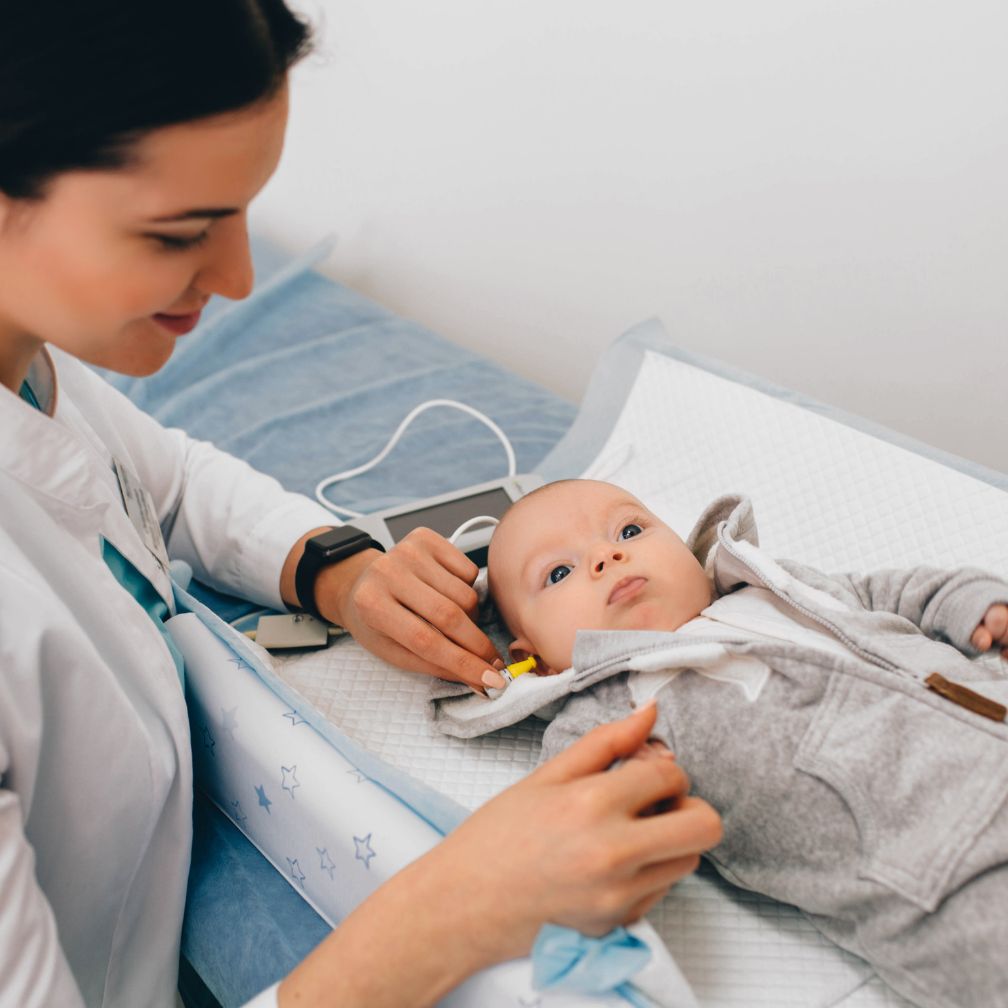
For young parents, learning that their baby exhibits auditory issues almost always feels terrifying and sad. Nevertheless, the reassuring fact stands: with swift screening and appropriate intervention, infants facing hearing loss will routinely prosper. Remarkably, such young children can gain language proficiency, interpersonal traits, and lasting relationships in their community, cultivating a deeply rich existence!
Pairing classic hearing devices with advanced cochlear technology offers two primary clinical solutions for supporting infants who exhibit hearing loss. In the following segment, we detail their specific functions and explain how to determine the best choice for your infant.
Understanding Infant Hearing Loss
Congenital auditory impairment in infants can emerge as a result of diverse root causes, such as:
- Spontaneous genetic variations (even across lineages devoid of hearing loss history)
- Harmful in-utero viral infections like cytomegalovirus (CMV) and rubella viruses
- Unexpected labor complications, featuring perinatal hypoxia or preterm birth
- Particular medications administered within neonatal intensive care
What matters above all else? Prompt clinical identification. That’s why babies throughout the United States undergo testing for hearing loss before leaving the hospital. Leading pediatric hearing professionals routinely utilize the industry-standard “1-3-6” target timetable:
- Initial baseline screening executed before 1 month of life
- Formal diagnostic verdict secured within 3 months
- Specialized treatment (incorporating clinical devices or speech therapy) started within 6 months of life
Meeting these clinical targets offers infants optimal support for normal speech, expressive language, and intellectual growth. If you desire assistance regarding these auditory screens, your primary pediatrician stands ready to assist you!
Infant Hearing Aids: Overview & Benefits
In supporting babies who exhibit mild to severe hearing deficits, wearable hearing aids frequently serve as the primary intervention. These small, custom-fit devices intensify sound signals, helping infants distinguish human speech and natural sounds more clearly.
Pediatric-grade hearing devices prove to be:
- Clinical grade safe for use with young infants just a few weeks after birth
- Manufactured with pliable, soft ergonomic molds that adapt as the baby matures
- Built featuring tamper-proof battery doors and dedicated pediatric safety elements
- Expertly programmed by a dedicated pediatric audiologist to align with your child’s hearing needs
While your infant develops, these hearing units require routine clinical adjustments to preserve physical comfort and functional efficacy.
Cochlear Implants in Infant Auditory Care
When an infant presents with profound sensorineural hearing loss while demonstrating limited success with standard amplification, a cochlear device can be prescribed. Unlike standard acoustic hearing devices, cochlear implant systems:
- Mandate careful surgical placement directly into the auditory system
- Fully bypass non-working sections of the inner ear anatomy
- Convert environmental sound into digital electrical signals that stimulate the acoustic nerve directly
Cochlear implants are:
- Fully FDA-sanctioned for application in young infants starting at 9 to 12 months of age
- Deeply effective when combined with early auditory-verbal therapy and strong home support
- Recommended only after comprehensive clinical evaluations by an expert audiologist and ENT specialist
This diagnostic phase features imaging, objective hearing assessments, and detailed consultations regarding anticipated long-term progress.
Contrasting Hearing Aids with Cochlear Implants
- Mild to severe hearing loss relies on Hearing Aids; Severe to profound hearing impairment calls for Cochlear Implants
- Non-Invasive wearable design: Hearing Aids; Surgical internal implantation: Cochlear Implants
- Traditional acoustic amplification: Hearing Aids; Electrical signal stream conversion: Cochlear Implants
- Treatment starts in newborn infancy: Hearing Aids; Placement starts at 9-12 months: Cochlear Implants
Final Takeaways: Navigating Infant Hearing Solutions
If your infant is diagnosed with a hearing condition, rest assured that clear options and compassionate guidance. Through the guidance of experienced pediatric audiology teams, many children go on to develop speech and language proficiency that rivals their normal-hearing peers.
Irrespective of whether your child receives fitting for hearing aids or surgery for cochlear devices, taking immediate action creates a profound lifelong advantage.
Have questions about your baby’s hearing health? Contact our clinical team today to receive a complete diagnostic assessment and personalized rehabilitation plan.