
You may have heard the fun fact that floppy-eared dogs don’t pick up sound as sharply as breeds with upright ears. Many animals—even tiny ones like hamsters—can swivel their ears to catch sound from any direction, whether it’s coming from behind them, beside them, or straight ahead.
But animals aren’t the only ones whose ear shape influences the way they hear. Human ears also come in different shapes and contours, and those variations may play a bigger role in hearing than we once thought.
Let’s take a closer look at how the design of your outer ear affects sound perception—and how this research could shape the future of hearing technology.
The structure of the outer ear
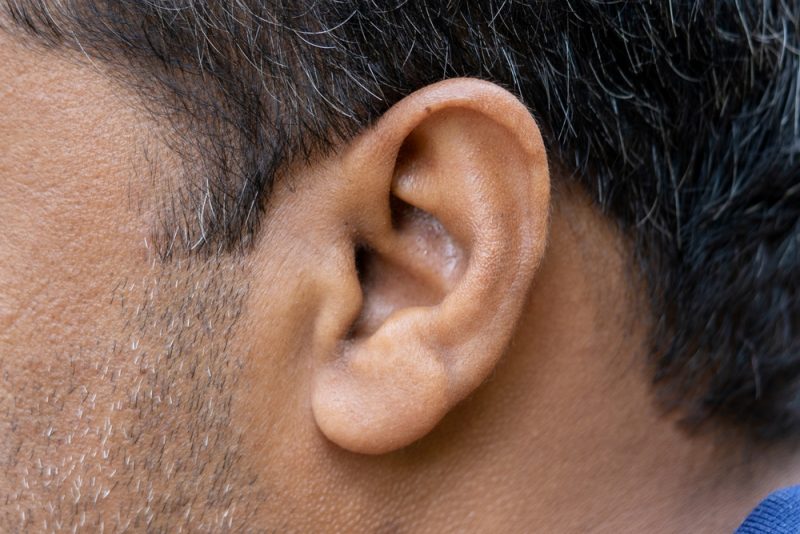
What we typically call the “ear” is officially known as the auricle, or pinna. It’s the visible portion on the outside of your head, along with the ear canal that guides sound toward the middle ear.
We grow up learning that hearing happens deep inside—in the inner ear. So, even if the auricle were injured, you could technically still hear as long as the canal, middle ear, and inner ear remained intact. Because of that, many people assumed changes to the outer ear—such as reducing how far it sticks out—had little or no effect on hearing.
That assumption led many to believe the auricle’s only job was to act as a funnel. But scientists began to wonder if this intricate, curved structure plays a much more sophisticated role.
Their curiosity led to surprising discoveries.
What researchers uncovered
We already know that the brain determines left-versus-right direction based on which ear detects a sound first. But the unique folds and ridges of the auricle seemed too complex to serve only as decorative sound scoops.
To test their theory, researchers altered participants’ outer-ear shape by placing soft silicone pieces inside the grooves of the auricle—carefully avoiding the ear canal.
Participants could still distinguish whether sounds were coming from the left or right. But their ability to tell whether a sound came from above or below completely disappeared.
In other words, modifying the ear’s shape temporarily removed a key part of the brain’s sound-location system—one we didn’t know existed.
How the experiment worked
Using fMRI technology, scientists monitored brain activity as participants listened to sounds. Before the ear modifications, their brains showed predictable patterns: neurons fired faster for sounds coming from below and more slowly for sounds above.
After the silicone inserts were added, this pattern fell apart. Sounds from high up seemed to come from below, and vice versa. Neuron firing patterns looked erratic, almost as if the brain couldn’t interpret the signals it was receiving.
Participants then wore the molds for a week. When they returned for retesting, something remarkable had happened—their brains had adapted. They once again recognized whether sounds were above or below them.
When the molds were removed, their brains quickly reverted to their original processing pattern.
This experiment revealed that sound doesn’t simply travel to the eardrum and into the inner ear. The outer ear actively shapes how sound reaches the brain, giving it clues about the sound’s 3D location.
Why this matters for hearing specialists
While we often talk about the inner ear as the center of hearing and balance, this study shows just how interconnected the entire hearing system is. The outer ear, once thought to be mostly cosmetic, plays a critical role in helping the brain interpret the world around us.
These insights excite hearing specialists because they could lead to more advanced hearing loss treatments. Understanding how the outer ear influences sound perception may pave the way for next-generation hearing aids—devices that better mimic the natural cues your ears provide.
Hearing technology has already made huge strides in the last decade, and research like this helps push innovation even further. As we continue learning how the brain and outer ear work together, the listening experience for hearing aid users will only keep improving.